

The Power of a Simple Dinner Prayer
Dinner time at our house can feel a bit messy, to say the least.
With twin three-year-old boys who think sitting still is optional, a neurodivergent seven-year-old navigating sensory sensitivities around food (and who REALLY likes tomato sauce on everything), a ten-year-old negotiator, and an eleven-year-old daughter finding her way through pre-teen emotions—well, let’s just say it’s rarely picture-perfect.
There’s spilled milk. Complaints about vegetables. The occasional meltdown over textures or sounds. And of course, the inevitable “he’s touching me!” from across the table.
Some nights, just getting everyone to the table feels like an achievement. Pausing for prayer? That can feel like just one more thing on an already overwhelming to-do list.
But here’s what has become clear: it’s in these messy, ordinary moments that faith takes root.
Every night at our table—whether it’s a home-cooked meal or fish and chips on a Friday—we bow our heads and say together:
“Thank you Jesus for our food, our family, our friends. Amen.”
It’s short. It’s simple. And it’s teaching our children more about prayer than expected.
Teaching faith at home does not require perfection. It requires consistency.
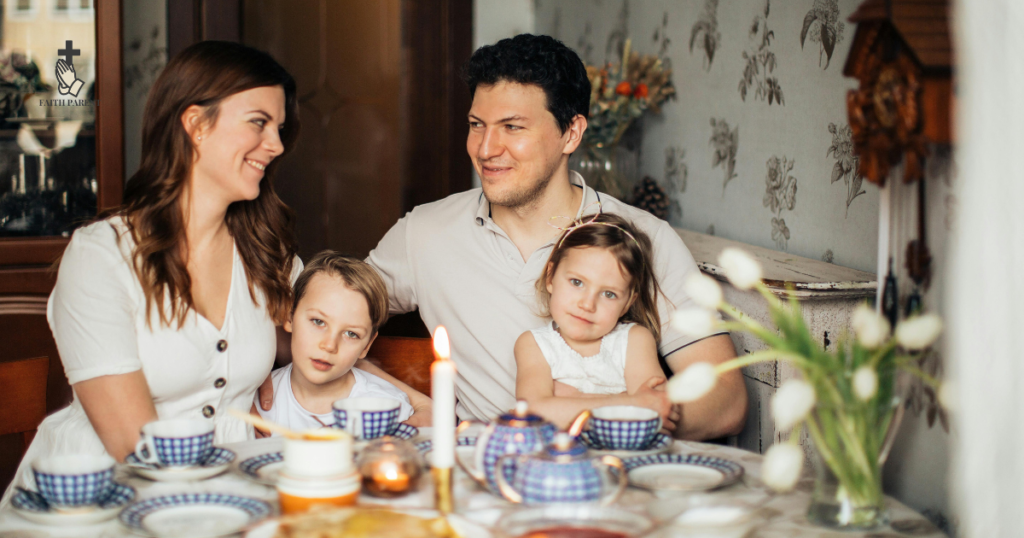
Faith Grows in Ordinary Moments
It’s easy to believe that spiritual formation needs to look structured and impressive—formal devotions, long prayers, uninterrupted quiet time.
But for most families, especially those raising young or neurodivergent children, life is beautifully loud and imperfect.
Faith doesn’t grow because the house is quiet.
Faith grows because parents choose to include God in real life.
When children see prayer woven into everyday routines—like dinner—they begin to understand that God is not distant or reserved for Sundays. He is present in the ordinary.
The Beauty of Repetition
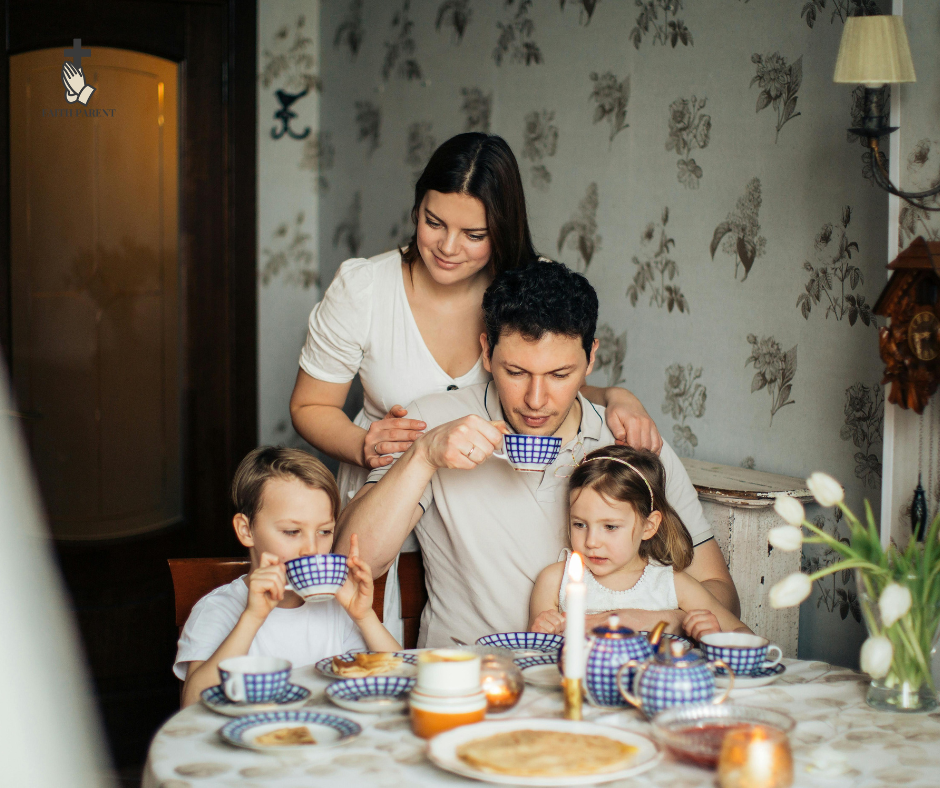
The twin boys can barely sit still for thirty seconds, but they know this prayer by heart. Small hands reach across the table. Eyes squeeze shut. Voices join together.
At three years old, they are already participating.
The eleven-year-old, navigating pre-teen questions and emotions, still joins in without hesitation.
Repetition isn’t boring—it’s formative.
Repeating a simple family dinner prayer helps children learn faith through habit, not pressure. Each night reinforces something powerful: we pause to acknowledge God before we do anything else. We recognise that everything we have comes from Him.
This is what prayer looks like in real life—not always eloquent or lengthy, but consistent and heartfelt.


Teaching Children What Prayer Really Is
Children learn prayer by doing it.
They discover that prayer is not complicated or intimidating—it’s simply talking to Jesus. It’s thanking Him. It’s inviting Him into the everyday.
One evening, a seven-year-old voice asked:
“Why do we thank Jesus for our food?”
That question opened a conversation about provision—how farmers grow the food, how parents work to provide, and how ultimately every good gift comes from God (James 1:17).
Suddenly grace was no longer just a sentence recited before eating. It was a moment of discipleship.
Simple prayers create space for meaningful conversations.
Three Ways Dinner Grace Builds Faith
1. It Establishes God as Central
Praying before eating teaches children that God comes first—even before satisfying hunger.
In a world that encourages “me first,” this daily pause quietly shapes their priorities. It reminds them that life revolves around Jesus, not themselves.
That message, repeated night after night, becomes part of who they are.
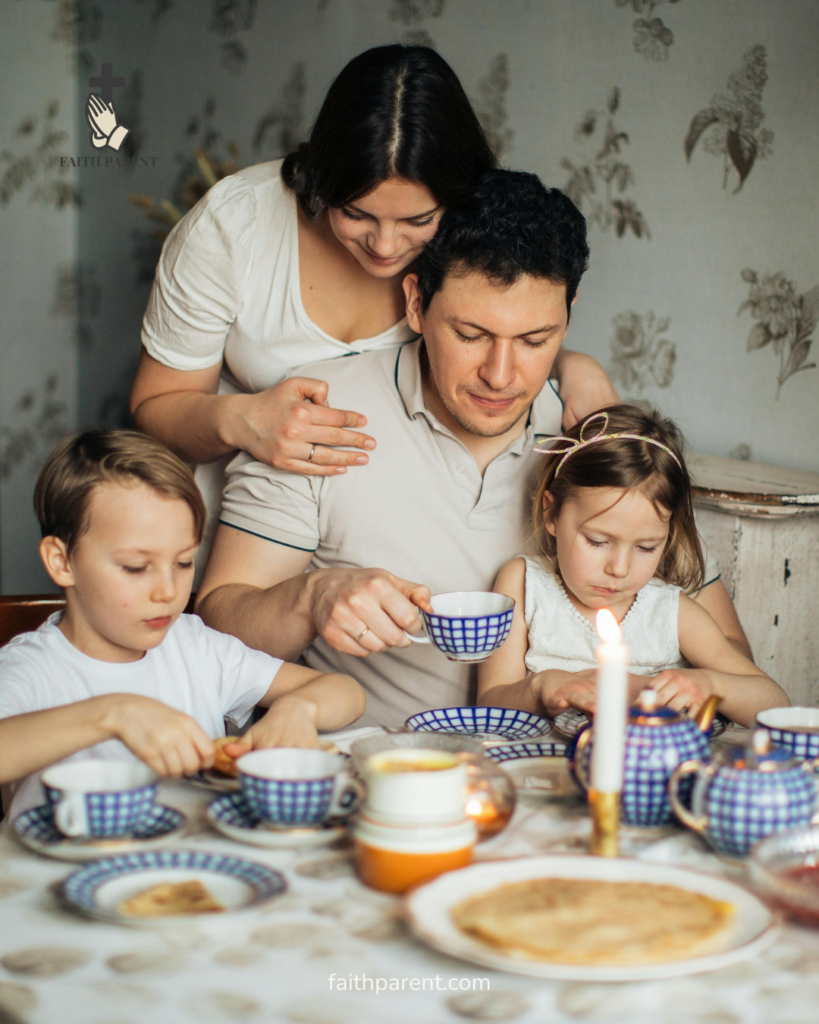
2. It Creates a Culture of Gratitude
Children are naturally self-focused. Gratitude must be modelled and practised.
By saying “thank you Jesus” every evening, hearts are being gently trained toward thankfulness. Over time, gratitude becomes more than ritual—it becomes posture.
And grateful hearts grow strong faith.
3. It Builds Prayer Confidence
When prayer becomes a daily habit, it stops feeling awkward or intimidating.
Children who pray every day grow confident speaking to God. They understand that He listens. They believe their words matter.
That confidence will carry into teenage years, adulthood, and beyond the family table.
You Don’t Need Perfect—You Need Faithful
There are evenings when grace is rushed because someone is melting down.
There are nights when one child is praying while another is crawling under the table.
There are moments when exhaustion makes prayer feel like going through the motions.
But God works through faithfulness, not perfection.
The goal is not an Instagram-worthy dinner table. The goal is to consistently point children to Jesus in the midst of real life.
Faith is not something reserved for church services.
It is something lived at home.
~ Start Tonight ~
If praying before meals is not yet a rhythm in your home, tonight is a beautiful place to begin.
Don’t overcomplicate it.
It can be as simple as:
“Thank you Jesus for our food, our family, our friends. Amen.”
Or even:
“Thank you, Jesus. Amen.”
The power is not in the length of the prayer.
The power is in the habit.
When families pause together, bow heads, and give thanks, something eternal is happening. Seeds of faith are being planted—seeds that will grow long after children leave the table.
Dinner may be messy.
Children may be loud.
Parents may be tired.
But simple, faithful grace can shape a lifetime of prayer.
Start with grace.
And watch what God does with it.
Faith Parent is here to support you in raising your children in faith—one simple, faithful step at a time.
For more practical resources on building prayer into your family life, visit faith-parent.com/shop and subscribe to our newsletter for monthly encouragement for Christian parents committed to teaching faith at home.
Leave a Reply